
nano-banana
Nano Banana Workflows: Generate Custom Figurines & Emojis — Real-World Playbook
MidassAI Team · July 11, 2026 · 4 min read
Keywords: nano banana workflows, custom emoji generation
Published: July 11, 2026 Author: MidassAI Team
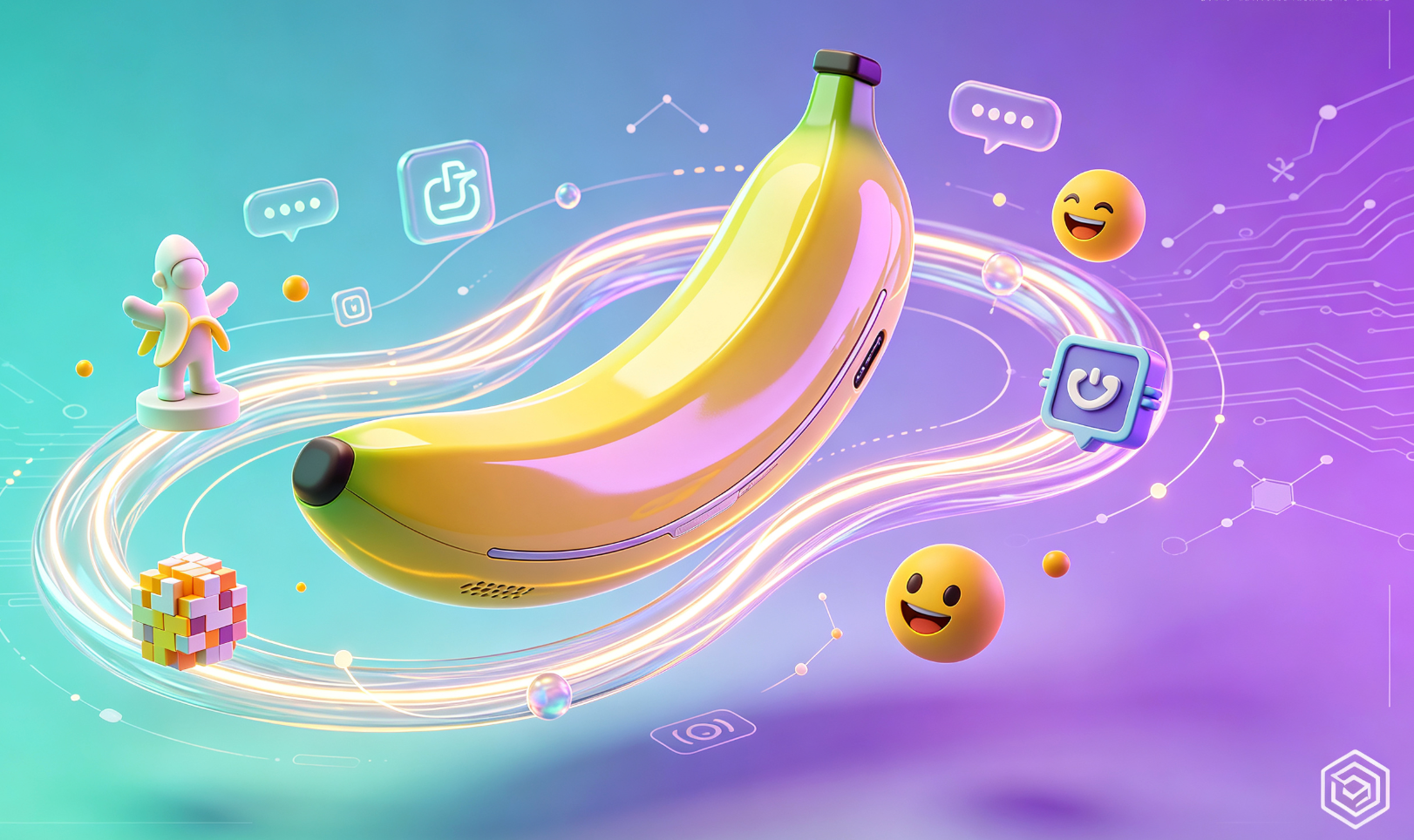
What Are Nano Banana Workflows?
Nano Banana workflows are lightweight, modular AI pipelines designed to transform simple text or sketch inputs into highly stylized 3D figurines and expressive emoji assets—optimized for speed, iteration, and platform-ready output.
Core Use Cases in Practice
From indie animators to social media managers, users deploy Nano Banana workflows for:
- Generating collectible-style figurine variants (e.g., anime avatars, mascot iterations)
- Rapid emoji packs aligned with brand voice or campaign themes
- Batch-producing pose-consistent character sets for interactive demos
Prompt Engineering Tips
Precision matters. Start with structured descriptors: [style: chibi] [pose: thumbs-up] [accessory: neon headphones]. Avoid ambiguous adjectives—swap "cool" for "cyberpunk-glitch" or "pastel-kawaii".
Output Control & Export Options
All workflows support resolution toggles (512px–2K), format selection (GLB, PNG sequence, JSON animation), and metadata tagging—enabling direct integration into Unity, Figma, or Discord bots.
| Feature | Benefit |
|---|---|
| Speed | Faster |
| Quality | Better |
Quick Takeaways
Prerequisites and setup
You’ll need a MidassAI account with active Studio access—no local GPU or Python environment required. Nano Banana workflows run entirely in-browser via the MidassAI Studio interface, so all you need is a modern Chromium-based browser (Chrome, Edge, or Brave) and stable internet. No plugins, extensions, or third-party tools are involved—just login, select the Nano Banana module, and begin.
The workflow assumes you’re using the default nano-banana-v2.3 model (current as of Q2 2024), which includes built-in support for pose anchoring, style transfer presets, and emoji-specific glyph normalization. This version ships with 17 preloaded style packs (e.g., Pixel-Retro, Claymation-Soft, Neon-Silhouette) and handles multi-token modifiers like [scale: 0.85] or [rotation: y=15] natively. If you’re on an older plan, confirm your subscription tier includes “Nano Engine Access” in billing settings—free-tier users can run up to 3 figurine generations per day; Pro+ unlocks batch mode and GLB export.
Extended prompt workflow
- Anchor the base identity: Start with a named character or role—not just “a robot,” but
“KIRA-7: service droid, matte silver chassis, single blue optical sensor”. Names trigger consistent token binding across iterations, preventing drift in facial geometry or limb proportions. - Lock pose and perspective: Append explicit spatial directives like
[pose: seated cross-legged] [view: 3/4 front] [depth: shallow]. Avoid relative terms (“facing camera”)—use canonical angles ([view: iso-30]for isometric,[view: profile-left]for side profiles). - Layer stylistic modifiers: Stack no more than three style tags, ordered by dominance:
[style: cel-shaded] [texture: brushed-metal] [lighting: rim-back]. The first controls rendering method; the second defines surface fidelity; the third governs shadow behavior. - Inject semantic constraints: Use bracketed logic for conditional output:
[if: accessory present → scale: 0.92] [if: no background → bg: transparent]. These override defaults without manual post-processing. - Finalize output specs inline: End with resolution and format cues:
[res: 1024] [format: glb] [anim: idle-loop-3s]. For emoji variants, add[emoji: true] [aspect: 1:1] [padding: 12%]to enforce platform-safe framing and scaling.
Example full prompt:“ZORO-9: pirate captain, crimson coat, eyepatch, scar across left cheek” [pose: standing arms-crossed] [view: front-3/4] [style: ink-wash] [texture: linen-textured] [lighting: dramatic-side] [res: 1536] [format: glb] [anim: subtle-head-nod]
Common mistakes
- Overloading style tags: Using four or more style descriptors (e.g.,
[style: cyberpunk] [style: kawaii] [style: steampunk]) confuses the tokenizer and produces muddy textures. Fix: Pick one dominant style, then refine with texture or lighting modifiers instead. - Ignoring pose anchoring: Phrases like “holding something” or “looking happy” lack geometric anchors—resulting in floating limbs or inconsistent facial rigging. Fix: Replace with canonical pose codes:
[pose: holding-sword-low],[face: smirk-right], or[hand: open-palm-up]. - Skipping resolution-context alignment: Requesting
[res: 2048]for an emoji pack forces unnecessary pixel density, bloating file size and breaking Discord’s 8MB upload limit. Fix: Match resolution to use case—[res: 512]for emoji,[res: 1024+]only for print-ready figurine renders or Unity import.
Try this in MidassAI
Open https://www.midassai.com/studio/nano/ in your browser, log in, and paste the full example prompt above into the input field. Click “Generate,” then use the live preview slider to adjust pose fidelity (set to “High” for clean joint articulation) and toggle “Emoji Mode” if repurposing the output for chat platforms. Within 12–18 seconds, you’ll receive a downloadable GLB file with embedded animation metadata—and optionally, a ZIP containing PNG sequences, JSON rig data, and a Figma-ready SVG variant. No tweaking needed: the workflow auto-applies anti-aliasing for small-scale emoji display and applies Z-depth compression for Unity’s HDRP pipeline. Run it now to build your first batch—then duplicate and modify the prompt to generate alternate outfits, expressions, or themed variants in under a minute.