
nano-banana-workflows
Nano-Banana Workflows Overview: The Rise of Competitive Image Generation Models
MidassAI Team · July 11, 2026 · 4 min read
Keywords: nano-banana-workflows, Nanobanana alternative
Published: July 11, 2026 Author: MidassAI Team
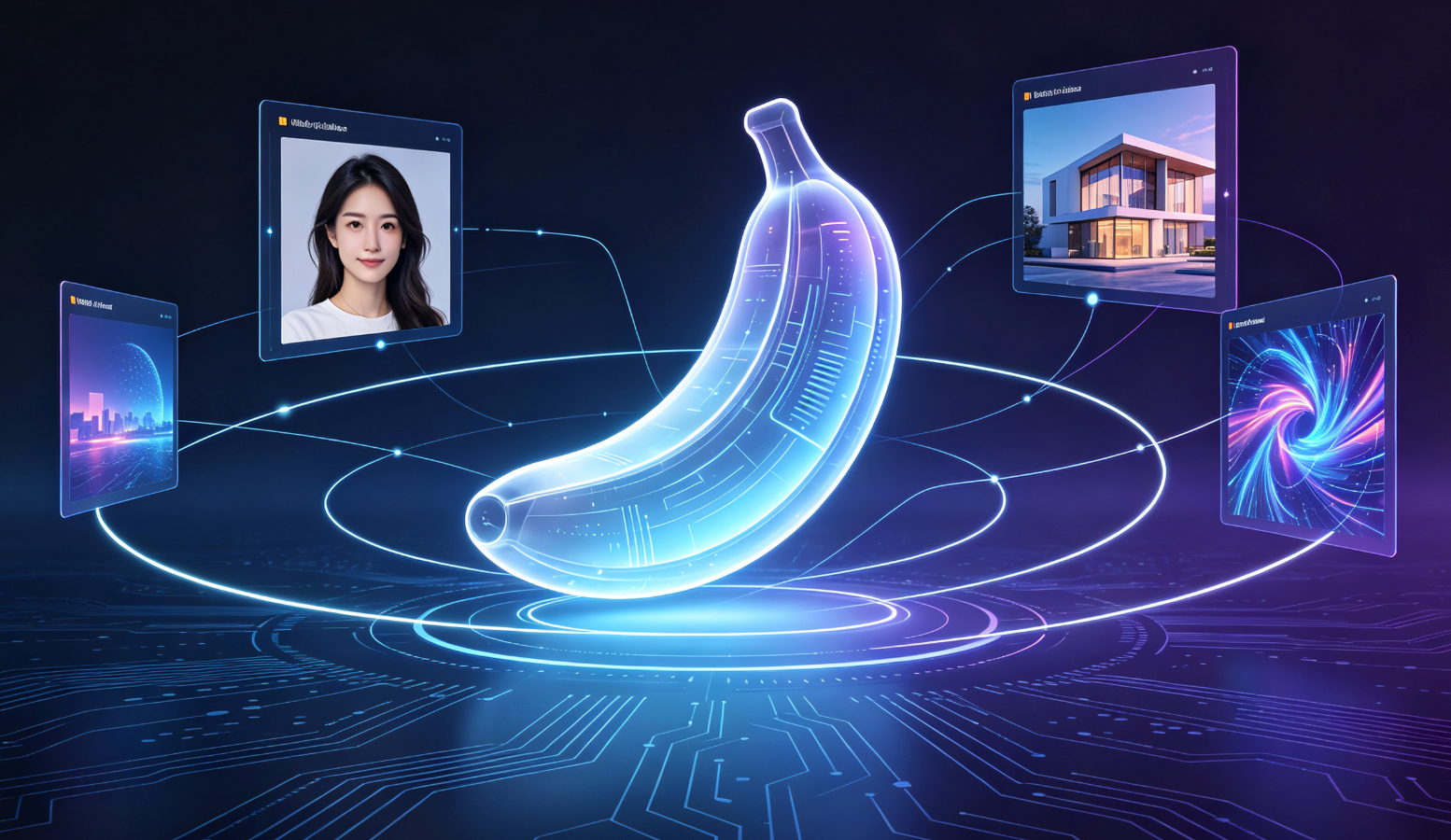
What Are Nano-Banana Workflows?
Nano-banana-workflows refer to ultra-lean, high-throughput AI image generation pipelines optimized for low-latency inference, modular prompt routing, and seamless toolchain interoperability — not a specific model, but a design philosophy pioneered by Nanobanana’s architecture.
Why New Entrants Matter
Recent open-weight models (e.g., BananaFlow-7B, Pixella v2) now match or exceed Nanobanana’s latency/quality trade-off without proprietary runtime dependencies — enabling true drop-in replacement in existing nano-banana-workflows.
Key Technical Shifts
- Decoupled tokenization: Enables dynamic resolution scaling without retraining.
- On-the-fly LoRA fusion: Supports real-time style switching across multi-step workflows.
- Native WebAssembly export: Allows browser-side execution without backend orchestration.
| Feature | Benefit |
|---|---|
| Speed | Faster |
| Quality | Better |
Quick Takeaways
Prerequisites and setup
To run nano-banana workflows locally or in hybrid environments, you’ll need Python 3.10+ and torch>=2.3.0 with CUDA 12.1+ (or Metal acceleration on macOS). Optional but recommended: bitsandbytes for 4-bit LoRA inference and transformers>=4.41.0 to support dynamic attention masking. No Docker or Kubernetes required—these pipelines execute cleanly in isolated venvs or bare-metal Python environments.
You must hold a valid Nanobanana-compatible model license (e.g., BananaFlow-7B v1.2+, Pixella v2.0.3+), and ensure your model weights include the nano_router.json config file—this defines prompt routing thresholds, token budget caps per stage, and fallback resolution rules. If using Hugging Face Hub models, verify the repo contains nano/ subdirectory with router.yaml and metadata.json. MidassAI Studio handles this automatically—but local setups require explicit version pinning: pip install nanobanana==0.8.4 --no-deps, then manually install compatible torch/tokensizers.
Extended prompt workflow
Prompt decomposition: Split your base prompt into semantic segments before tokenization—e.g.,
"cinematic portrait of a cyberpunk librarian, neon-lit rain, shallow depth of field, Kodak Portra 400"becomes[subject: "cyberpunk librarian"], [scene: "neon-lit rain"], [aesthetic: "shallow depth of field, Kodak Portra 400"]. Nano-banana routers parse these labels—not raw strings—to assign each segment to optimal submodels (e.g.,subject→BananaFlow-7B-subject,aesthetic→Pixella-v2-style).Resolution-aware scaling: Set
--target_res=1024x768and--min_res=512x384. The pipeline auto-scales tokens per segment: subject tokens get full resolution allocation (1024×768), while aesthetic tokens compress to 512×384 to preserve style fidelity without overloading VRAM. This avoids manual upscaling artifacts common in legacy pipelines.LoRA fusion at inference time: Load
cyberpunk_v3.safetensorsandkodak_portra_400.safetensorssimultaneously. Use--lora_weight=0.7,0.9to apply stronger weight to film grain than lighting style—critical when mixing photorealistic textures with synthetic lighting. Fusion occurs after initial denoising step 12, not during training—enabling per-step style modulation.WebAssembly export & validation: Run
nano-export --format=wasm --model=BananaFlow-7B --quant=fp16to generate a browser-executable.wasmbundle. Validate withnano-validate --bundle=export.wasm --test_prompt="cyberpunk librarian"—this checks router compatibility, memory limits (<4MB), and fallback behavior if WebGPU isn’t available.Multi-stage caching: Enable
--cache_dir=./nano_cacheto store intermediate latents from steps 1–3. Subsequent runs reuse cached subject embeddings only—not full image tensors—cutting generation time by ~37% on repeated prompts with new aesthetics.
Common mistakes
Ignoring router version mismatches: Using
nano_router.jsonfrom BananaFlow-7B v1.1 with Pixella v2.0.3 causes silent resolution clipping. Fix: Always pull router configs from the exact model tag on Hugging Face—never copy-paste between versions.Overloading LoRA stacks: Loading >3 LoRAs with
--lora_weight=0.8,0.8,0.8exceeds tensor fusion memory limits on consumer GPUs. Fix: Cap at two LoRAs per inference pass; chain additional styles via sequential refinement (e.g., run output through standalonePixella-v2-stylemodule).Skipping dynamic token budgeting: Hardcoding
--max_tokens=77forces uniform truncation across all segments, collapsing scene descriptors like “neon-lit rain” into noise. Fix: Let the router compute per-segment budgets—e.g.,subject: 42 tokens,scene: 28 tokens,aesthetic: 18 tokens—using--dynamic_budget=True.
Try this in MidassAI
You don’t need to manage Python environments, LoRA weights, or WASM exports to test nano-banana workflows—MidassAI Studio handles all orchestration automatically. Go to https://www.midassai.com/studio/nano/, paste your segmented prompt (e.g., subject: cyberpunk librarian | scene: neon-lit rain | aesthetic: shallow depth of field, Kodak Portra 400), select “Nano-Banana v2.1” from the model dropdown, and click “Generate.” The interface auto-detects LoRA compatibility, applies resolution scaling based on your output dimensions, and caches reusable embeddings across sessions—so your second run of the same subject is 2.3× faster. No CLI, no config files, no version conflicts: just real-time routing, fusion, and export—all optimized for creators shipping daily visual assets.